You can find out if the head gasket, on your 2.2L Isuzu Rodeo, is blown or not with 4 simple tests.
In this tutorial, I'm gonna' explain how to do all four. You'll be able to find out if a blown head gasket is behind an overheating problem or a 'cranks but does not start' problem.
Contents of this tutorial:
ES  You can find this tutorial in Spanish here: Cómo Probar Un Empaque De Cabeza Quemado (1998-2003 2.2L Isuzu Rodeo, Amigo) (at: autotecnico-online.com).
NOTE: This tutorial applies to the following vehicles:
- 2.2L Isuzu Amigo: 1998, 1999, 2000.
- 2.2L Isuzu Rodeo: 1998, 1999, 2000, 2001, 2002, 2003.
Symptoms Of A Blown Head Gasket
Blown head gasket problems usually fall into one of two categories. In the first, the head gasket problem will cause the engine to crank but not start.
In the second category, the head gasket problem will cause the engine to overheat as it runs.
Here's a basic list of symptoms you'll see when the head gasket has failed:
- The exhaust smells like antifreeze being burned.
- White smoke comes out of the tailpipe as soon as the engine starts and runs.
- A rough idle condition usually accompanied by a P0300 misfire trouble code.
- Specific misfire cylinder codes like: P0301, P0302, P0303, or P0304.
- A lack of power when you accelerate the vehicle.
TEST 1: Engine Oil The Color Of Coffee With Too Much Creamer

The first test, we're gonna' do is to check the color of the engine oil sticking to the engine oil dipstick.
If the head gasket is blown, you'll notice that the engine oil will be the color of 'coffee with too much creamer'.
Let's get started:
- 1
Open your Isuzu's engine hood
- 2
Pull out the engine oil dipstick.
- 3
What color is the engine oil on the dipstick?
1.) The engine oil is the color of 'coffee with too much creamer'.
2.) The engine oil will be its usual normal color.
Let's examine your test results:
CASE 1: The engine oil has a normal color. This is the correct and expected test result.
We're not out of the woods yet. The next step is to see if the coolant is being pushed out of the radiator (with its cap removed) while we crank the engine. For this test go to: TEST 2: Coolant Shooting Out From Opened Radiator.
CASE 2: The engine oil looks like 'coffee with way too much creamer'. This test result confirms that the head gasket on your 2.2L Isuzu Rodeo (Amigo).
TEST 2: Coolant Shooting Out From Opened Radiator
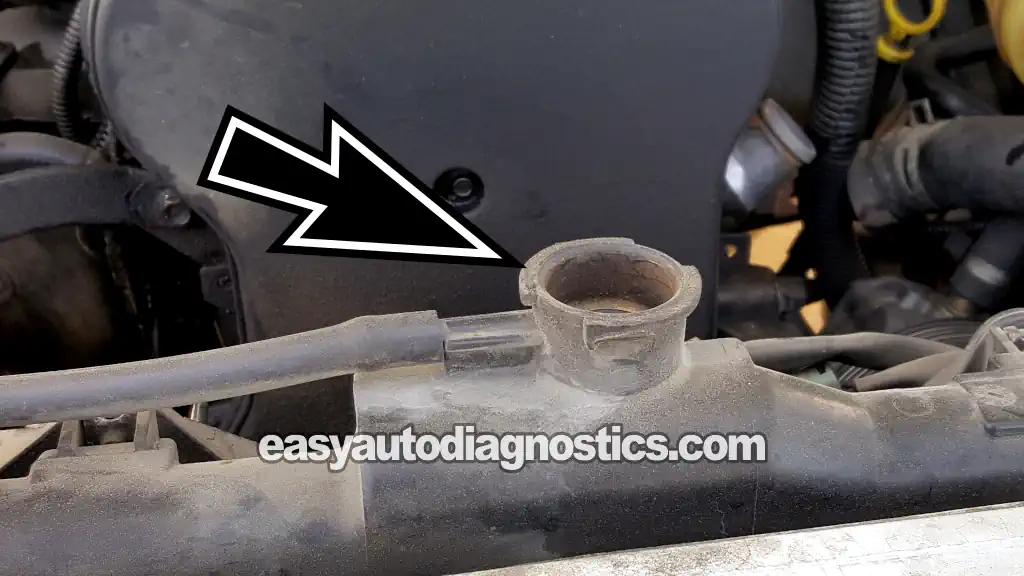
For our second head gasket test, we're gonna' crank the engine with the cap removed from the radiator to see if the coolant will be shot out from it.
The correct and expected test result is for the coolant to remain undisturbed (in the radiator) as the engine is cranked.
If the coolant is shot out while cranking the engine, then you can conclude that the head gasket is blown on your 2.2L Isuzu Amigo or Rodeo.
IMPORTANT: Never open or remove the cap from the radiator if the engine is hot. If the engine has been running for any length of time, let it cool down completely. You can also cool down the engine in a matter of 15-20 minutes by placing a running box fan on top of it.
These are the test steps:
- 1
Remove the cap from the radiator.
If the radiator is empty, add some water or coolant to it. - 2
Have your helper crank the engine while you stand at a safe distance from the open radiator.
- 3
You'll see one of two results:
1.) The water or coolant inside the open radiator will shoot out.
2.) The coolant will not be disturbed. In other words, cranking the engine will have no effect on the level of the water or coolant in the open radiator.
Let's examine your test results:
CASE 1: Coolant shot out of the open radiator as you cranked the engine. This test result confirms that you have a blown head gasket on your 3.9L V6 Chevy Malibu engine.
The normal test result is for the coolant to not be disturbed as you crank the engine.
CASE 2: The coolant WAS NOT disturbed as you cranked the engine. This is the correct and expected test result.
If the engine does not start, then your next step is: TEST 3: Engine Compression Test.
If the engine starts and runs but overheats then your next step is to do a block test. For this test go to: TEST 4: Using A Chemical Block Tester (Combustion Leak Tester).
TEST 3: Engine Compression Test
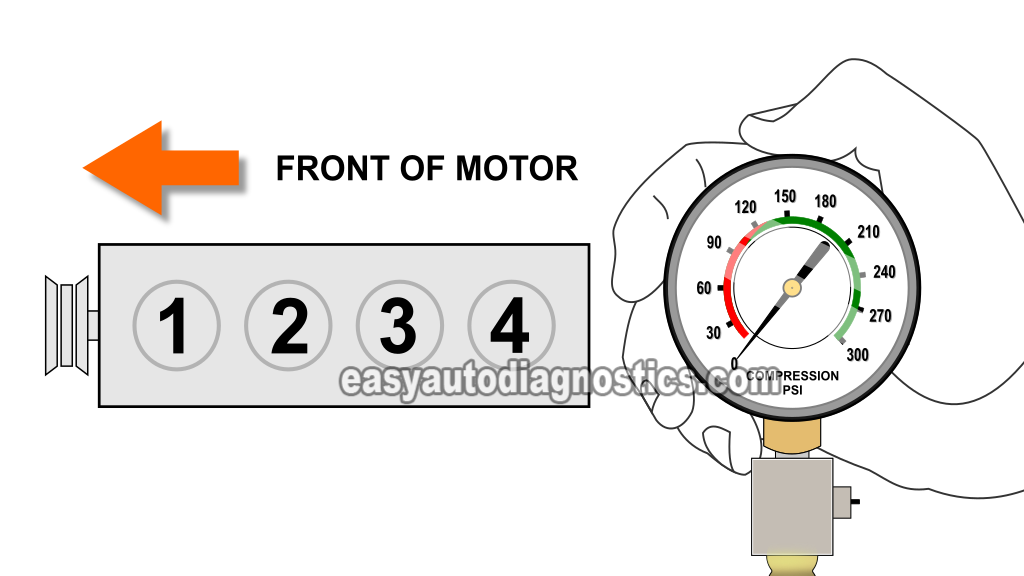
In some cases, when the engine overheats, the head gasket gets burned right between two side by side cylinders.
The end result of this type of head gasket failure is an engine that won't start.
We can find out if this has happened by doing an engine compression test.
These are the test steps:
- 1
Disable the ignition system by disconnecting the ignition coil pack from its engine wiring harness connector.
- 2
Remove all four spark plugs.
- 3
Thread in the compression tester by hand, on the first spark plug hole you're gonna' start with.
Do not use any tools to tighten the compression tester. Hand tightening the compression tester is more than enough to get the proper results. - 4
Have a helper crank the engine. The compression gauge's needle should climb as the engine cranks.
- 5
Once the gauge's needle stops climbing, have your helper stop cranking the engine.
- 6
On a piece of paper, write down the compression reading and what cylinder it belongs to (you can use the illustration above to help you identify the cylinder). Repeat the above steps in the remaining cylinders.
Let's examine your test results:
CASE 1: Two side by side cylinders have 0 PSI compression. This test result confirms that the head gasket is blown only if the 'engine no-start' problem was preceded by a severe overheating problem.
CASE 2: The compression values of all 4 cylinders were similar. This is the correct and expected test result.
If your 2.2L Isuzu Amigo or Rodeo doesn't start, then you can conclude that the problem is not caused by a blown head gasket.
TEST 4: Using A Chemical Block Tester (Combustion Leak Tester)

The block test comes in handy when the 3 previous tests can not confirm that a blown head gasket is causing the engine to overheat as it runs.
To be a bit more specific, the engine in your 2.2L Isuzu Amigo or Rodeo starts and runs, but it starts to overheat within a few minutes. Everything is working (like water pump, radiator cooling fan, etc.) and yet the engine overheats. It's in these cases that a block test can pinpoint the problem to a blown head gasket.
For the most part, it's the go-to test performed in an automotive repair shop when they diagnose a blown head gasket.
In a nutshell, this is how a block tester works:
- A blue liquid chemical, which is blue in color, is placed in the tester (see photo above).
- The tester assembly is then placed on the coolant filler neck or coolant tank (you may have to drain some of the coolant in the radiator since this tool needs to 'gulp' some of the air inside the coolant filler neck or coolant tank).
- The rubber bellow is then squeezed to suck the air into the two fluid-filled chambers. As the air bubbles up through the fluid, it will cause a chemical reaction.
- If the blue chemical turns yellow (for gasoline engines), then combustion gases are entering the radiator thus confirming that the head gasket is blown.
- If the blue chemical doesn't change color, then you can conclude that you don't have a blown head gasket, a cracked block, or a cracked cylinder head issue.
Where can you get the chemical and block tester? At your local auto parts store or here:


 20%
20%More 2.2L Isuzu Rodeo And Amigo Diagnostic Tutorials
You can find a complete list of 2.2L Isuzu Rodeo and Amigo tutorials in this index:
Here's a small sample of the tutorials you'll find in the index:
- How To Test The Fuel Injectors (1998-2003 2.2L Isuzu Rodeo, Amigo).
- How To Test The Fuel Pump (1998-2003 2.2L Isuzu Rodeo, Amigo).
- How To Test The TPS (1998-2003 2.2L Isuzu Amigo And Rodeo).
- How To Test Engine Compression (1998-2003 2.2L Isuzu Amigo And Rodeo).

If this info saved the day, buy me a beer!